Thursday, 7 May 2015

Convenient sawmill


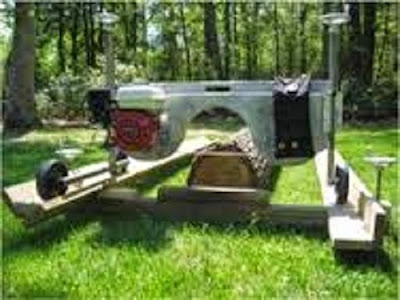
Convenient sawmills got to be well known in the United States beginning in the 1970s, when the 1973 vitality emergency and the back to the area development had prompted restored enthusiasm for little woodlots and in independence. Their ubiquity became exponentially since 1982, when the first Wood-Mizer compact band sawmill was concocted.
The primary convenient sawmills were the "Small time Farmer's Sawmills." These plants highlighted extensive roundabout edges and were promoted amid the mid twentieth century by organizations like Sears, Montgomery Ward and JC Penney. These machines were all "private mark" machines produced by the Belsaw Company. Many early sawmills were intended to be belt-driven from a steam footing motor (which could likewise be utilized to transport the saw). 
chainsaws for sales

Before the appearance of the versatile 'plant, little scale sawmills were for the most part cobbled-together issues built and worked by (quite often) two men with an affinity for tinkering. This was, and remains, a customary occupation for Amish men; dissimilar to most mechanical frameworks, little sawmills regularly don't utilize power.

Monday, 4 May 2015

How to Split Hardwood Firewood


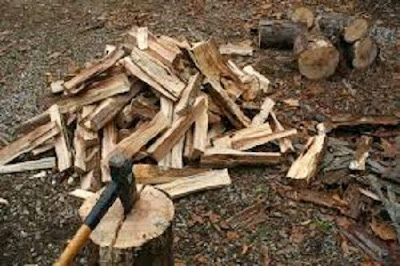
Sometimes, when firewood is cut, it is too large in diameter to season well or fit the firebox or wood stove it is intended for. Splitting the wood can make even large diameter logs usable, as well as allowing them to season more quickly. Someone with scrawny arms and the right technique can split hardwood more quickly and more efficiently than a bulky linebacker swinging uncontrollably. Learn to set yourself up for success, splitting hardwood with a maul or wedges, and finishing the job properly.
chainsaws

·         Use a maul or splitting wedges to split hardwood. A splitting maul is essentially a thicker, more wedge-shaped axe made for splitting hardwood along the grain, with a blunt sledge-hammer edge on the back of the splitting blade. These are typically somewhat heavier than an axe, usually by several pounds, and the weight of the maul makes the job easier.
        Splitting wedges are basically metal wedges that you drive into the wood with a sledge. The benefit of the wedge is that you can place it along the grain to split the wood, then drive it into the exact same place until it splits.
        Axes are used to chop wood, not to split it. It's best to use a maul or splitting wedges if you want to split hardwood.
·         Cut your wood to length. Normal wood stoves and smaller fireplaces usually take a 16 to 20 inch (40 to 50 cm) log, and the shorter the log is, the more easily it will split. You should cut your wood to the most efficient length for your purpose, in terms of both handling and storing it, as well as making it a suitable length for your application.
        Try to cut the ends of each piece of firewood square and flat, as you will need to stand them on end to split them, and crooked cuts will make this difficult to do.

Monday, 27 April 2015

Grass shears


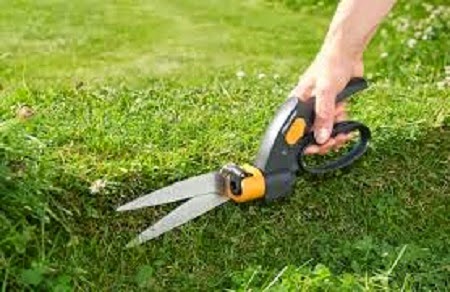
Grass shears contrast from pruning shears in being since quite a while ago taken care of and having the handles at right-points to the cutting edges. They can be utilized to cut grass from a standing position. Two sorts are accessible: with the cutting edges level and with the sharpened pieces of steels vertical. Even razor sharp edges are utilized to evacuate grasses which have not been cut by the yard cutter. Vertical razor sharp edges are utilized for trimming the edges of a yard. In 1939, a form of the Vertical Grass Shears was imagined in which a long handle with a lever and wheels at the base with the shears was connected. This empowered the clients to trim the edge of the grass close to the walkway and driver ways. Fueled trimmers have for all functional purposes supplanted this kind of grass shears.
chainsaws

Sunday, 19 April 2015

Arrangement a technique for cutting up the tree


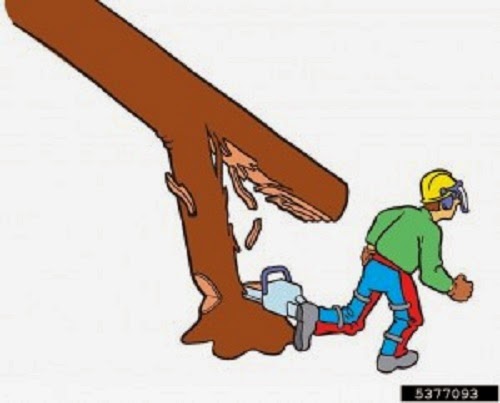
Cut off extensions beginning at the lower end of the storage compartment and attempting to the top. At whatever point conceivable, rest the saw motor against the storage compartment and turn the bar through the limb.
Before you even begin your saw, remain back and size up the circumstance. Consider how you'll cut every extension and what will happen when you do. Clearly extensions confronting up will fall
chainsaws

Verify the fall way is open. It's not all that unmistakable what will happen when you cut extensions caught under the fallen tree. They'll be under weight, and sometimes uprooting them will result in the tree to drop. Indeed prepared experts can't generally anticipate how far the storage compartment will drop, or whether the tree will roll.
Anyway you ought to dependably envision the direst outcome imaginable and be arranged for it. Take a couple of minutes to pass a way behind you and to the side for a brisk retreat. Furthermore, dependably work with an accomplice so that in the event that you get to be caught or harmed, you'll have somebody to call for help.
Begin by evacuating limbs nearest to the lower end of the storage compartment, and progress in the direction of the highest point of the tree. At whatever point conceivable, remain on the tough side of the tree. Photographs 1 – 3 show systems for expelling extensions from the top side of the storage compartment and limbs under weight.
Work from the left half of the storage compartment (as you face toward the highest point of the tree). This permits the most secure and most effective utilization of the cutting apparatus on the grounds that you can rest the side or base of the saw on the storage compartment and cut off the extensions with a rotating movement.

Thursday, 16 April 2015

Cutting wood with chainsaw

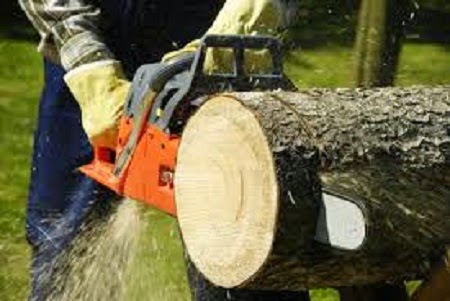
Procedure: There are by and large two bearings to cut, upwards and downwards. Most wood is cut best by setting the saw over the wood and chopping down through it (above left). Gravity will ordinarily pull the remove piece from the log and you can keep cutting in this style. However at times when the log or limb is under strain, chopping starting from the top will result in the wood to squeeze bringing about the saw to wind up stuck inside the cut. For this situation, it is best to cut upwards (above right) by putting the saw underneath the wood and slicing up through it. Utilizing the plastic wedge can help keep bigger logs from squeezing the saw chain. Cut extensions off tree first Branches First: With most fallen trees, it is best to start cutting at the extension end first. Begin by cutting off all limbs that are too little for kindling. Place the saw at the base of these limbs and cut them off smooth at the piece of the appendage or log where they are connected. Equalization: Search for extensions that may be holding the storage compartment over the ground. These extensions go about as props and can be useful in keeping the storage compartment lifted for simple cutting. You ought to watch the complete structure of the tree and arrangement your cutting in a sensible request, evacuating most props last. Trunks: As you advance from the highest point of the tree towards the storage compartment, the breadth of the wood will steadily thicken. You will in any case be cutting upwards or downwards, just it will be important to work the saw at distinctive points. Cut the wood with chainsaws at two 45 degree edges, or as an A-surrounded house. At the point when both sides of the logs are equitably cut, you ought to complete the piece by cutting straightforwardly descending or upward. 
CHAINSAWS

Tuesday, 14 April 2015