Sunday, 23 August 2015

Looking after a Saw Chain

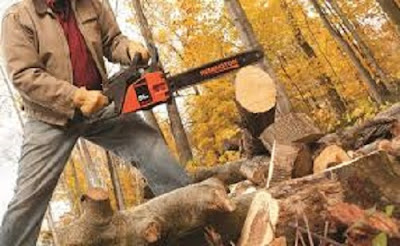
Chainsaws are conceivably exceptionally perilous gadgets, and a large portion of the risk originates from the cutting force of the saw chain. Inadvertent contact with a moving chain can bring about genuine damage or even demise. Keeping a saw chain clean, greased up, and sharp serves to avert mishaps and keep up proficient execution.
Oil

Keeping a saw chain greased up amid operation displays an extraordinary test on the grounds that the chain moves at a rapid and is not secured. When the chain begins moving, most oils fly right off. Chain oil repays by including an uncommon glue added substance that keeps the oil on the chain even while the recent is moving. 
 Chainsaws

Monday, 17 August 2015

Sorts of cut

With a miter saw, you will have the capacity to make the accompanying cuts:
Straight Cross Cut
90o points, miter table set at the 0o position
For moldings on entryway or window outlines or straightforwardly on the divider (perfect for decking and encircling sheets).
Miter Cross Cut
Cutting edge set at an edge other than 90o, left or right miter, and miter table set at some point other than 0o
For entryway and window casing corners (45o)
To close baseboard corners (45o)
For making joints (30o or 45o), little pieces to close finishes, inside and outside baseboard corners, seat rail corners (45o)
Angle cut
The sharp edge is permitted to tilt: single incline, the cutting edge will tilt to one side; double angle, to one side or right
Calculated cuts under 90o (single slant) and more prominent than 90o (double slant)
For making joints (30o or 45o) , inside and outside corners for baseboards, seat rails (45o)
Compound cut (miter and incline)
A miter point and a slope edge in the meantime: both length and width are cut at edges other than 90°

For beautiful cornice embellishment, seat rails, rail and stile joints 

Friday, 14 August 2015

Chainsaws available to be purchased in Ireland - purchaser's aide

Chain greasing up oil is a vital prerequisite. It goes about as a coolant and grease for the bar and chain. Our Stihl, Tanaka and Husqvarna cutting apparatuses all accompany a programmed chain oil pump. This is normally timed to come up short on oil when the fuel runs out. It is dependably a smart thought to top up your oil hold when garnish up your fuel. For the successful and safe running of your chainsaws, it is indispensable to utilize oil with the right consistency. A cutting tool keep running without greasing up the anchor will be inclined to extending the chain or notwithstanding breaking the chain, which can bring about dreadful wounds. And additionally chain harm you will destroy your aide bar in the event that you run the cutting tool without the right chain oil. 

Friday, 26 June 2015

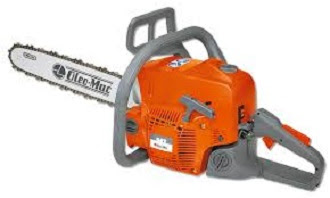
The oleomac Chainsaw


Oleomac has turn out with an item that is an executioner idea as well as elements a smooth application. The organization chose that as opposed to adding to the rundown of what lumberjacks need to convey with them to a jobsite, why not make utilization of something that each lumberjack as of now has – a chainsaws? Their cutting apparatus winch just joins to a standard chainsaw and uses the motor's pull to do the majority of the hard work so people don't need to.

How can it function? The winch accompanies a connector unit that is particular to the model of chainsaw being utilized. The winch jolts onto the cutting tool and uses the saw studs to fit into the winch's throwing. The winch is intended to be tied down to an overwhelming stabilizer, for example, another tree, rough outcropping or vehicle, and uses 3/16 inch steel airplane link to tie everything together. It can draw up to 4000 lbs. with a 7 torque cutting tool, at up to 60 feet for every moment! Utilizing a grab square will build that ability to 8000 lbs. 
 Chainsaws sales

Tuesday, 23 June 2015

Leaf blowers

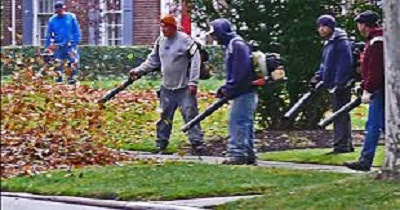
The granddad of today's leaf blower was intended to spread manures and pesticides on harvests and natural product trees. In the late 1960's and mid 1970's, greens keepers understood that this blower – without the compartment for chemicals – could be utilized to move leaves and other yard flotsam and jetsam. Makers reacted by outlining a leaf blower that could be utilized by mortgage holders and grass care and scene experts. Today, makers keep on examining and grow new upgrades for further lessening leaf blower sound and emanations.

 Chainsaws sales

Since their presentation, leaf blowers have quickly turn into a vital time and work sparing clean-up device for scene upkeep experts and property holders. Leaf blowers are to a great degree proficient for cleaning leaves, grass clippings, and flotsam and jetsam from garages, walkways, porches and patios. In these circumstances, a leaf blower is additional time and expense effective than a rake or a sweeper.

Monday, 22 June 2015

Hewing


A German woodworker cutting a log into a bar. Note the blue chalk line snapped on the log to which the hewer lives up to expectations.
In some medieval Scandinavian structures an extraordinary strategy for cutting which creates a herringbone design on the timbers has been utilized (Swedish: Slinthuggning, Norwegian: Sprettejling). This is an advanced recreation in Stråsjö Chapel in Hälsingland, Sweden. 
Chainsaws

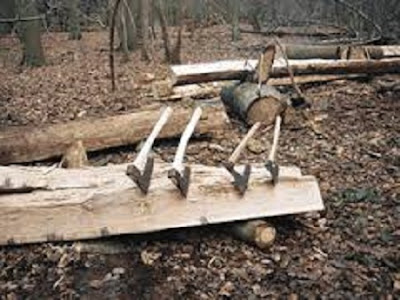
In carpentry cutting is the procedure of changing over a log from its adjusted normal structure into (timber) with pretty much level surfaces utilizing fundamentally a hatchet. It is an antiquated system still utilized sometimes to square up bars for timber surrounding.
Cut is a general term intending to hit or blow with a chainsaw, for example, a hatchet or sword; to slash or slice, and is utilized as a part of fighting, stone and wood cutting, and coal and salt mining in this sense.Hewing wood is to shape the wood with a sharp instrument, for example, an axe,[3] particularly leveling one or more sides of a log.
Techniques
As an old strategy for timber change, diverse strategies for every progression in slashing have grown ever.
Plan log
After a tree is chosen and felled, cutting can happen where the log landed or be slid or jerked (slipped with a steed or bulls) out of the forested areas to a work site. The log is put over two other littler logs close to the ground or up on trestles about waist tallness; balanced out either by indenting the bolster logs, or utilizing a 'timber puppy' (additionally called a log dog,[4] a long bar of iron with a tooth on either end that sticks into the logs and anticipates development). The hewer measures and finds the timber inside of the log on both finishes and imprints lines along the length of a log, as a rule with a chalk line.

Scoring
The following step is to slash indents each foot or two, as profound as the stamped line utilizing a hacking or scoring hatchet, called scoring. No less than three routines are utilized as a part of scoring. 1) Standing on the log and swinging a hatchet to cleave the score; 2) In Germany a strategy for two craftsmen remaining on the ground with the log on trestles and swinging descending to cut the scores. (see feature in connection beneath); 3) A chainsaw is utilized to indent the log, the segments made by the indenting are then separate from utilizing a felling hatchet.